


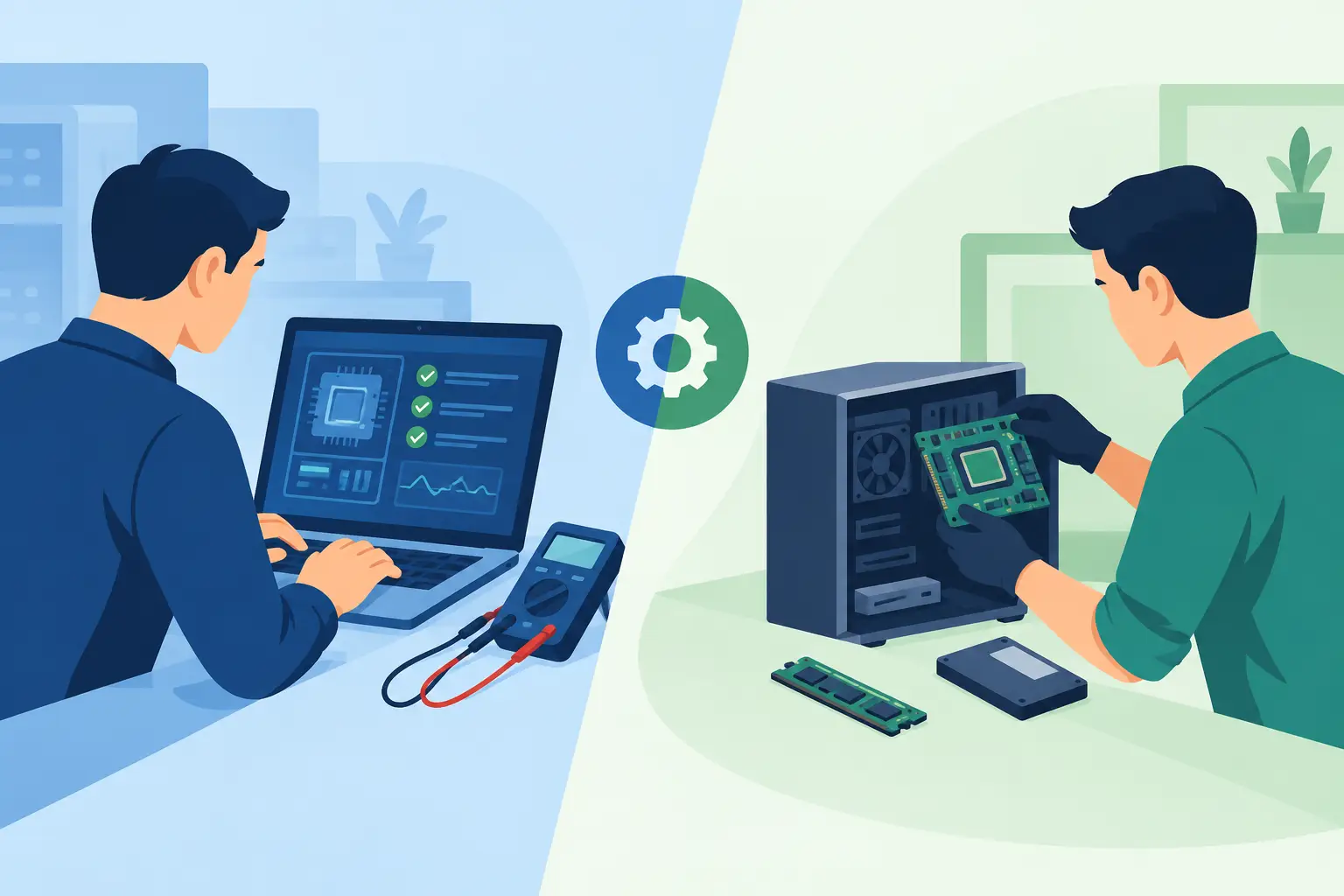
Diagnostic Testing Versus Parts Swapping Explained
A warning light comes on, the battery dies overnight, or the truck will not crank. The temptation is understandable: replace the part that seems most likely to be bad and hope the problem goes away. But diagnostic testing versus parts swapping is the difference between repairing a vehicle correctly and paying for a series of educated guesses.
A modern vehicle can have dozens of computers, miles of wiring, sensors, relays, connectors, and modules communicating with each other. One failed component can create symptoms that point in several directions. A dead battery may be caused by the battery itself, but it could also be a weak alternator, excessive key-off draw, corroded cable, sticking relay, faulty module, or even a wiring issue hidden under the hood or dash.
The part is not always the problem. The cause is what matters.
What Parts Swapping Really Costs
Parts swapping is replacing a component because it is commonly associated with a symptom, because a scan tool listed a code, or because a similar vehicle once needed that part. Sometimes the guess happens to work. Often, it does not.
The immediate cost is easy to see: a new battery, alternator, fuel pump, ignition coil, body control module, or sensor that did not need replacement. The bigger cost is the time lost while the vehicle remains unreliable. A driver may make multiple trips to multiple shops, miss work, arrange rides, or worry that the car will leave them stranded again.
There is also a risk of creating a new problem. Many replacement modules require correct programming or relearning. Aftermarket electrical parts can vary in quality. Connectors can be damaged during repeated repairs. A battery disconnected without considering the vehicle's programming needs may trigger other issues. Replacing parts without proving failure is not a repair strategy. It is a gamble with your money.
This is especially common with electrical concerns because symptoms overlap. A vehicle that intermittently will not start might have a starter problem, a poor ground, a worn ignition switch, a transmission range sensor issue, a relay command problem, or a security-system fault. Replacing the starter first may feel logical, but it does not answer the central question: why did the starter fail to receive or use the command it needed?
Diagnostic Testing Versus Parts Swapping: The Real Difference
Professional diagnosis starts by verifying the complaint. Is the battery actually discharged? Does the no-start happen only when hot? Is the warning light constant or intermittent? Did the issue begin after a repair, collision, battery replacement, water leak, or aftermarket accessory installation?
Those details guide testing, but they are not a substitute for it. A qualified technician then measures what the system is doing. That can include battery condition and voltage drop testing, charging-system output, starter current draw, network communication, control-module data, wiring continuity, ground integrity, signal patterns, and key-off current draw.
A trouble code is a starting point, not a parts list. For example, a code that identifies a circuit issue may be caused by an open wire, shorted wire, poor connection, failed sensor, low reference voltage, damaged terminal, or failed control module. Installing the named sensor without testing its circuit may erase the code temporarily or change nothing at all.
The same principle applies to fuel delivery. A vehicle with a fuel-pump-related code does not automatically need a fuel pump. The technician must determine whether the pump has power and ground, whether the relay is operating, whether the control module is commanding it, whether fuel pressure is correct, and whether a wiring fault is interrupting the circuit. That process takes skill and time, but it prevents expensive guesswork.
Why Paid Diagnostics Are a Better Value
Some vehicle owners hesitate when they hear there is a diagnostic charge. That is understandable, especially after a frustrating repair experience. But a proper diagnostic process is often the least expensive path because it purchases information before parts are authorized.
A good diagnosis does not mean a technician glances at a scan tool and announces an answer in five minutes. Difficult electrical problems may require access, testing under specific conditions, wiring diagrams, factory-level scan data, voltage measurements, and sometimes extended observation. Intermittent battery drains and communication faults can be particularly time-consuming because the failure may not occur on command.
The goal is not to sell testing for its own sake. The goal is to identify the failed part, failed circuit, programming issue, or underlying condition that actually caused the concern. Then the repair can be explained clearly: what failed, how it was confirmed, what must be repaired, and what the cost should accomplish.
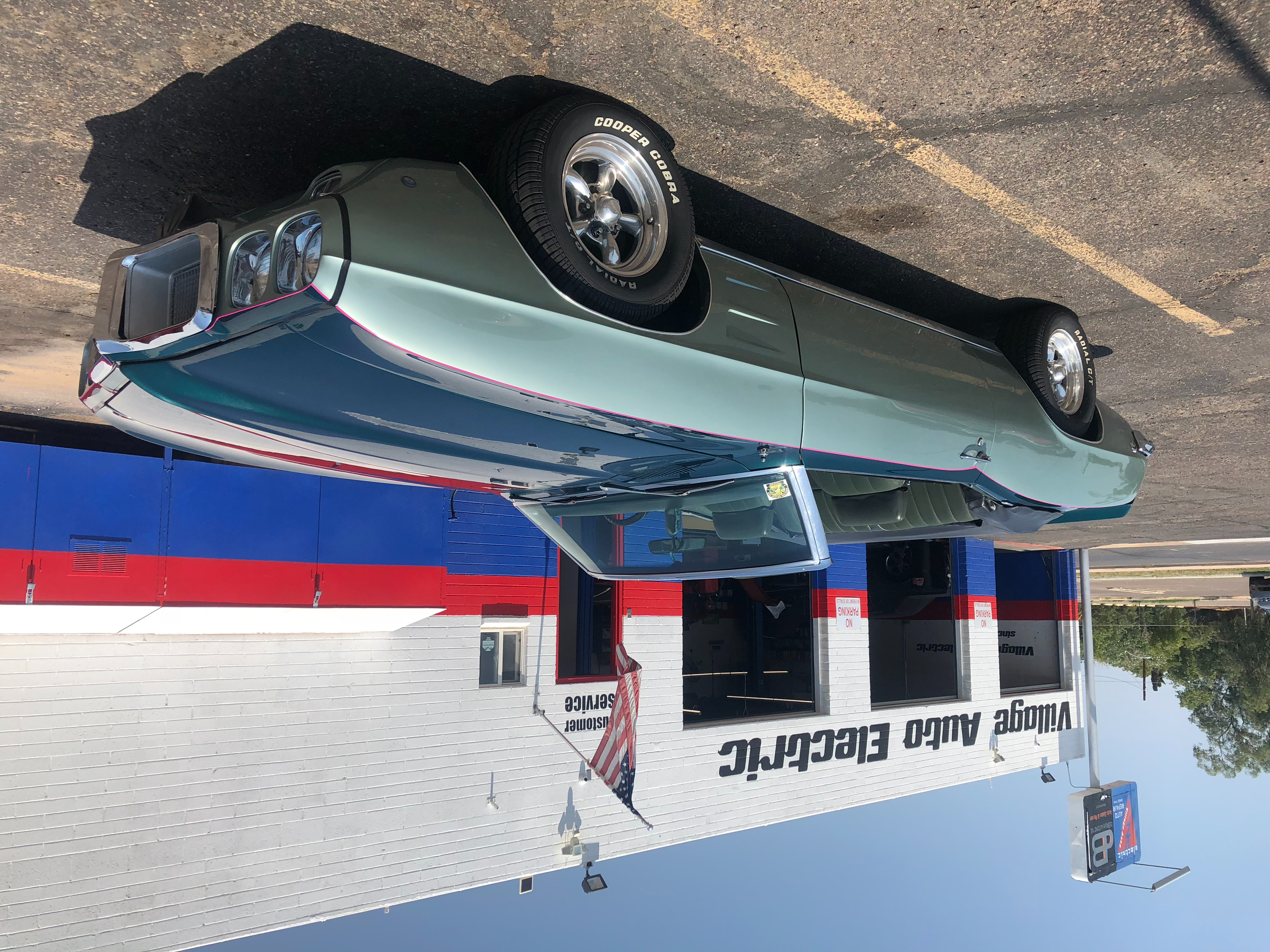
At Village Auto Electric, that approach is central to the work. Difficult electrical and electronic concerns are not treated as an opportunity to sell a stack of parts. They are treated as a problem to solve. We will NEVER recommend replacing a component simply because it is convenient or common.
Problems That Demand Proof Before Replacement
Certain repairs are especially prone to parts swapping. Battery and charging issues are a major example. A vehicle may receive a new battery only to go dead again because an accessory, module, relay, glove-box light, or aftermarket alarm is staying awake after shutdown. Without a parasitic-draw test and circuit isolation, the new battery is just another victim of the original problem.
ABS and SRS warning lights also require careful testing. These systems affect safety, and codes must be interpreted in context. A wheel-speed sensor code might be caused by a damaged sensor, but it can also result from a damaged harness, wheel bearing issue, corroded connector, or signal problem. Airbag-system faults should never be guessed at. Correct testing procedures matter.
Power windows, locks, seats, mirrors, radio concerns, and key programming issues can be equally deceptive. A window that will not move may have a failed motor, switch, regulator, broken wire in the door jamb, poor ground, or module problem. A key that will not start the vehicle may involve the key, immobilizer programming, antenna, battery voltage, or a communication issue between modules.
Control modules deserve particular caution. PCM and BCM replacement can be expensive, and many modules must be programmed or reflashed correctly for the vehicle. A module should be replaced only after power, ground, network communication, inputs, outputs, and programming status have been verified. In some cases, the existing module can be repaired or reflashed rather than replaced.
When Replacing a Part Makes Sense
Accurate diagnosis does not mean every repair becomes a lengthy investigation. Some failures are obvious and can be confirmed quickly. A visibly cracked belt, leaking battery, seized alternator, broken window regulator cable, or failed component with verified test results may call for straightforward replacement.
The difference is proof. A technician may confirm a charging failure with output testing, identify a bad battery cell with proper battery testing, or verify a fuel pump failure with pressure and electrical measurements. Once the evidence is there, replacement is no longer a guess. It is the correct repair.
There are also practical decisions based on vehicle age, condition, and budget. If several related wear items are near the end of their service life, a customer may choose to address them together. That is reasonable when the recommendation is transparent and the customer understands what is failed now versus what may need attention soon.
What to Expect From a Real Diagnostic Appointment
Bring as much history as possible. Mention when the problem occurs, whether any work was recently performed, how long a battery sits before it dies, and whether warning lights appeared after a particular event. If another shop has test results or repair records, those can be useful too.
Expect questions. Good technicians ask them because pattern details matter. A problem that occurs only after rain, only on hot afternoons, only after filling the fuel tank, or only when turning left can point testing in the right direction.
Then expect an answer based on evidence, not pressure. Sometimes the answer is simple. Sometimes the diagnosis reveals that the repair is not worthwhile for the vehicle's value. Either way, clear information puts you in control of the decision.
If your vehicle has already received parts without solving the problem, stop the guessing before the next invoice. Bring the symptoms, the repair history, and the vehicle itself to a shop equipped to test the system. The right diagnosis may not always be instant, but it is the surest way to spend repair dollars on the cause instead of the clues.

Comments