


Why Does Battery Die? Real Causes in Your Car
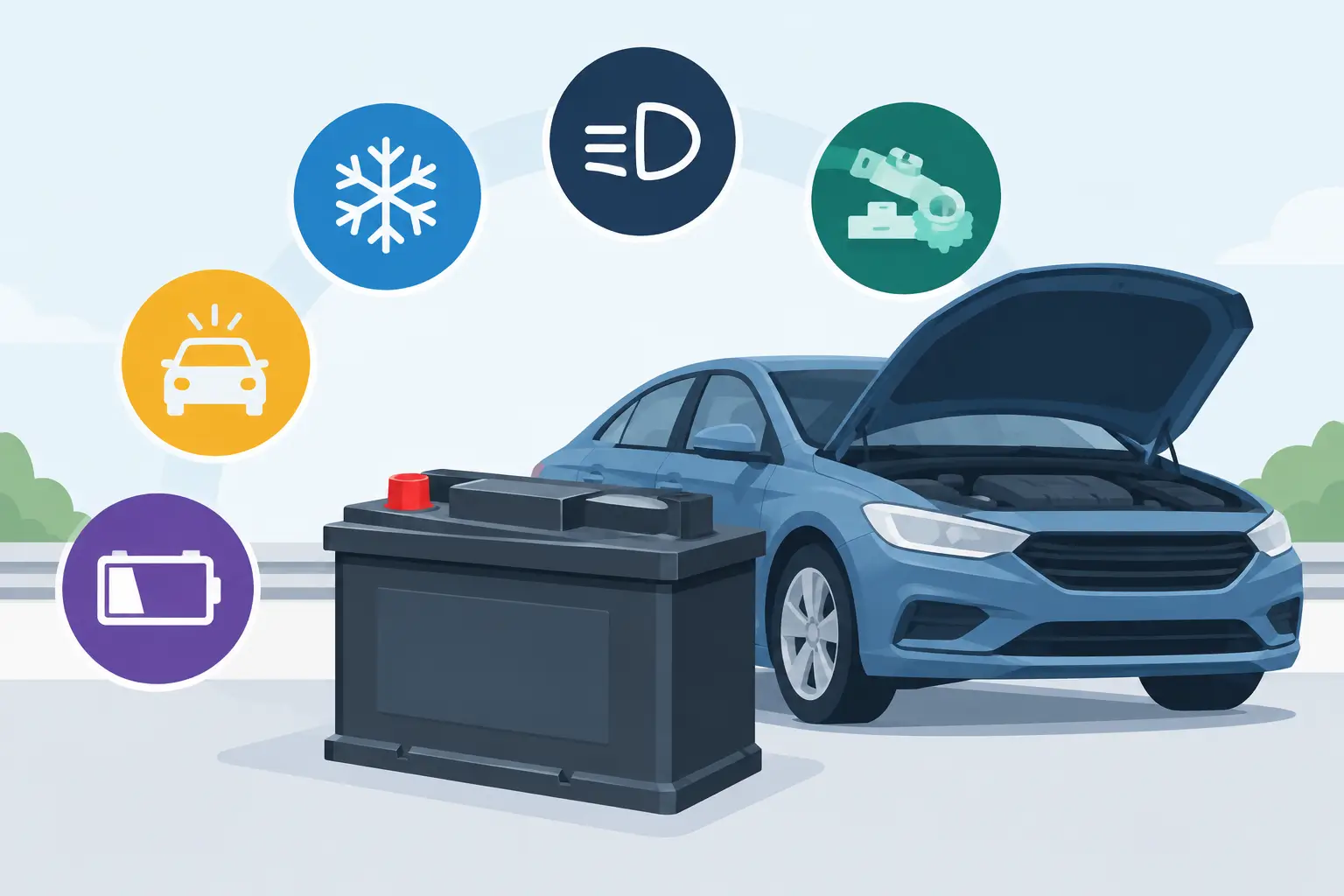
A vehicle that starts normally on Monday and is dead on Wednesday is not having a “battery problem” until the cause is proven. When drivers search why does battery die, the answer may be the battery itself, but it can also be a weak alternator, a poor cable connection, an electrical component that will not shut off, or a vehicle computer staying awake after the key is removed.
In Mesa, summer heat adds another factor. Extreme heat shortens battery life and can expose a charging or electrical issue that was already developing. Replacing the battery may get the car moving again, but it will not fix the reason it went dead. Accurate diagnosis matters because we will NEVER replace parts you do not need.
Why Does a Battery Die in a Car?
A car battery has two jobs. It provides a large burst of power to crank the engine, then it helps stabilize voltage while the engine runs. Once the engine is running, the alternator should recharge the battery and supply power for lights, computers, fuel injection, blower motors, and other electrical systems.
If the battery dies, one of three things is generally happening: the battery cannot hold enough energy, the charging system is not replacing the energy used, or something is consuming power while the vehicle is parked. The symptoms can overlap, which is why guessing based on one dead-battery event often leads to unnecessary parts replacement.
A battery that is simply old may fail without warning. A battery that repeatedly goes dead, however, deserves a complete charging and draw diagnosis. A new battery can be drained just as easily as the old one if the actual fault remains in the vehicle.
A Weak or Heat-Damaged Battery
Arizona heat is hard on batteries. High underhood temperatures accelerate chemical breakdown inside the battery, evaporate moisture, and reduce the battery’s ability to deliver cranking amps. Many batteries begin to become unreliable after several years, even if their case looks clean and there is no obvious warning before failure.
A battery can show 12 volts at rest and still fail under load. Voltage alone does not prove battery health. A proper battery test checks available capacity and voltage drop while the battery is asked to work. This helps separate a worn-out battery from a battery that was discharged by another problem.
Signs of a weak battery include slow cranking, clicking when turning the key, dim interior lights during starting, or warning lights that appear when cranking. Still, those same symptoms can come from corroded cables, a failing starter, or poor engine grounds. The test result must fit the whole vehicle, not just one symptom.
The Alternator May Not Be Charging Correctly
A battery can die because the alternator is undercharging, overcharging, or charging inconsistently. If the alternator cannot replace the power used to start and operate the vehicle, the battery gradually runs down. The car may start after a jump, drive for a short distance, then die again once the battery’s reserve is used up.
A charging system problem does not always turn on the battery warning light. Modern vehicles use computer-controlled charging strategies, battery current sensors, smart alternators, and variable voltage operation. A quick check at the battery terminals can miss an intermittent fault, a bad control circuit, a damaged wire, or a poor connection.
Overcharging is also a problem. Excessive voltage can damage a battery, shorten its life, and cause electrical issues elsewhere in the vehicle. The correct repair may be an alternator, but it could also involve wiring, a fuse link, a battery sensor, an engine control module command, or a poor ground. Diagnosis should identify which part actually failed.
Hidden Electrical Drains Can Kill a Good Battery
A parasitic battery drain occurs when an electrical circuit continues using too much power after the vehicle should be asleep. Some small draw is normal. Memory for the radio, clock, security system, and vehicle modules needs a small amount of current. The problem begins when a module, light, relay, motor, or accessory stays on longer than it should.
Common causes include a glove box, trunk, vanity, or underhood light that remains on; an aftermarket alarm, radio, remote start, or dash camera; a sticking relay; a failing door latch switch; or a control module that does not enter sleep mode. Power seats, power windows, cooling fans, and infotainment systems can also be involved.
These drains are often intermittent. A vehicle may test normally in the morning and kill the battery overnight only after a door lock command, a temperature change, or a module communication fault occurs. That is why pulling fuses at random or installing a disconnect switch is not a real repair. It may hide the problem while creating new inconveniences, such as lost radio settings or failed readiness monitors.
A proper parasitic draw test requires patience. The vehicle must be allowed to shut down fully, then current is measured and circuits are isolated without waking up the computers. On newer vehicles, this may involve scan-tool data, voltage-drop testing across fuses, wiring diagrams, and testing components in the conditions where the drain occurs.
Loose Cables and Bad Grounds Matter More Than People Think
Battery terminals may look acceptable and still have enough corrosion or looseness to cause a no-start. A poor positive cable connection limits power to the starter and fuse box. A poor ground can create low-voltage symptoms throughout the vehicle, including flickering lights, communication codes, random warning lights, and erratic accessories.
Cable problems are especially common when corrosion has traveled under the insulation or when a terminal has been replaced poorly. The battery may test good, the alternator may test good, and the vehicle can still be unreliable because current cannot move through a damaged cable or ground path.
The right test is a voltage-drop test under load. This checks the circuit while the starter or other component is operating. It is far more useful than simply looking at a cable or checking continuity with no load on the circuit.
Short Trips Can Leave the Battery Undercharged
Starting an engine uses significant battery power. If the vehicle is used mainly for very short trips, especially with A/C, lights, blower motor, phone charging, and other accessories running, the alternator may not have enough time to fully replace that energy. This is more noticeable with an aging battery or a vehicle that sits for several days between drives.
Short-trip use alone usually should not kill a healthy battery quickly. If it does, there may be reduced alternator output, excessive draw, or a battery with low capacity. A battery maintainer can help a vehicle that is stored or driven infrequently, but it should not be used to avoid finding a recurring electrical fault.
What to Do When Your Battery Keeps Dying
First, do not keep jump-starting the vehicle and hoping the issue disappears. Repeated deep discharges can damage a battery that might otherwise have survived. If the battery has gone dead, recharge it correctly before testing. A partially charged battery can produce misleading results.
Pay attention to the pattern. Does it die overnight, after sitting for several days, only after a long drive, or only when the weather is hot? Does the battery light come on? Do interior lights stay on? Did the problem begin after an accessory installation, collision repair, windshield replacement, or rodent damage? Those details can reduce diagnostic time and point toward the correct circuit.
Avoid assuming a new battery proves the repair is complete. If the old battery failed because of age, replacement may be all that is needed. If it failed because of undercharging or a parasitic draw, the new battery is now being placed in the same damaging conditions.
Get the Actual Cause, Not Another Guess
Battery failures can be straightforward, but recurring dead batteries are electrical diagnostic work. The vehicle needs testing of the battery condition, charging output, starter and cable voltage drops, key-off current draw, module sleep activity, and relevant circuits. The right process prevents expensive guessing.
Village Auto Electric has been solving difficult electrical problems for Mesa drivers and referring repair shops since 1949. Whether the issue is a battery that dies overnight, a charging warning light, an intermittent no-start, or an elusive module that will not power down, the goal is simple: find the cause and repair it correctly. A dead battery is frustrating. A verified answer gets your vehicle dependable again.

Comments