


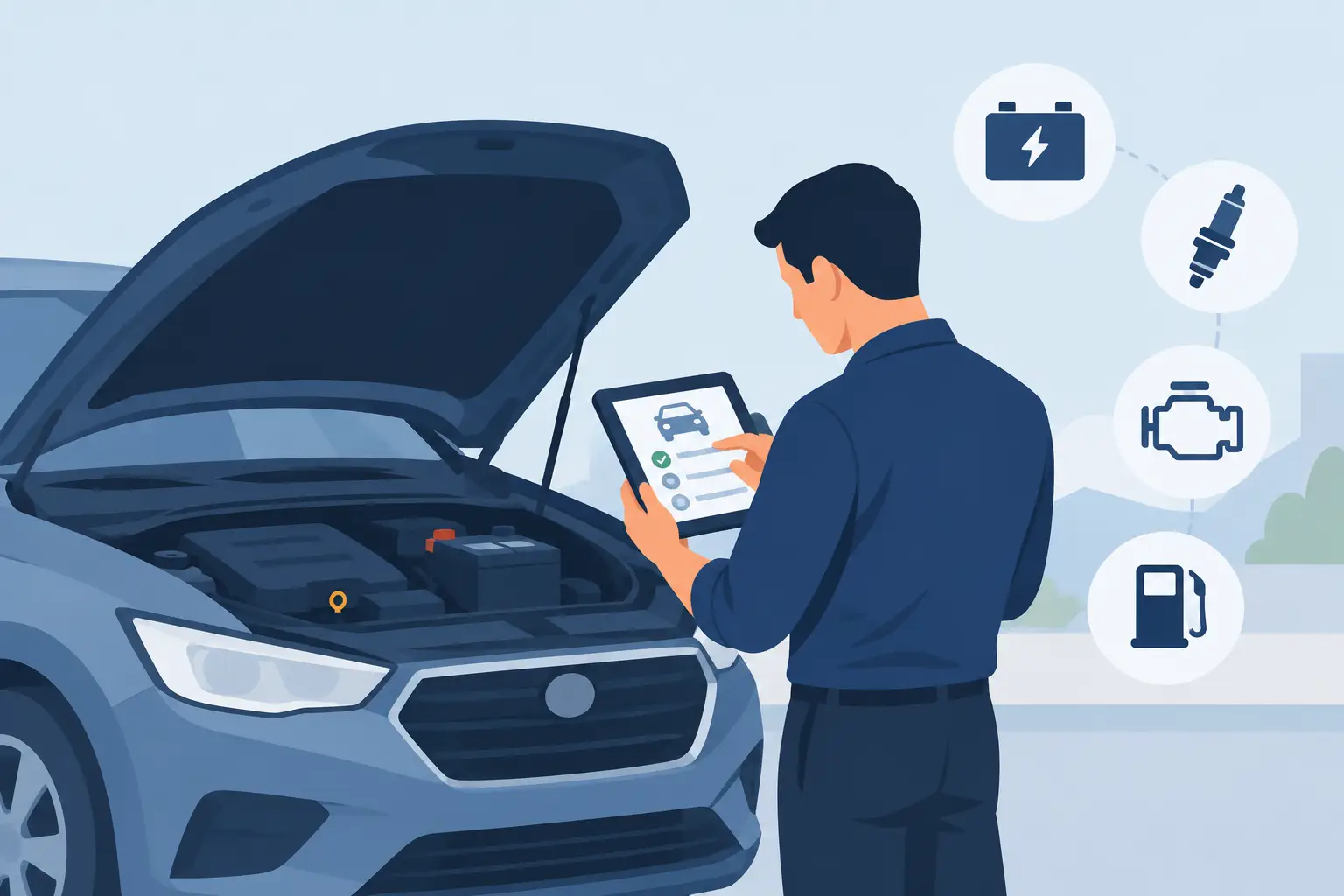
A No Start Case: What Diagnosis Should Prove
A no start case is not one problem. It is a symptom with several possible causes, and the difference matters. A vehicle may have a weak battery, a failed starter, poor cable connections, no fuel pressure, no spark, a crankshaft sensor problem, a security-system issue, or a computer that is not communicating. Replacing parts until it starts may get lucky. It can also turn a straightforward repair into an expensive guessing game.
For Mesa and East Valley drivers, heat adds another layer to the problem. High temperatures shorten battery life, stress electrical connections, and expose marginal starters and fuel-system components. The vehicle that started slowly last week may be completely dead in the driveway this morning. The right response is not to assume. It is to test the system and prove where the failure occurs.
What happens in a no start case?
The first question is simple: does the engine crank?
If you turn the key or press the start button and the engine does not rotate, that is a no-crank condition. You may hear one click, repeated clicking, or nothing at all. The problem is usually in the battery, battery cables, starter circuit, starter motor, ignition switch, neutral-safety or clutch switch, relay, wiring, or anti-theft authorization.
If the engine cranks normally but will not run, the starter system has done its job. The focus shifts to fuel, ignition spark, injector pulse, air flow, engine timing, compression, sensor signals, and computer control. These are two different diagnostic paths. Calling both conditions a "bad starter" is how unnecessary repairs begin.
A third situation is intermittent starting. The vehicle may start perfectly at the shop after being towed in, then fail later when hot, after sitting overnight, or only with a certain key. Intermittent faults demand more than a quick battery check. They require testing the vehicle under the conditions that make the problem happen.
Start with battery condition, not battery age
A battery can be relatively new and still be the reason a vehicle will not start. A loose terminal, internal battery failure, corrosion hidden inside a cable end, or a poor ground can prevent the starter from receiving enough current. A dash light coming on does not prove the battery is good. Lights require far less power than an engine starter.
A proper starting-system test checks battery state of charge, battery health, voltage during cranking, cable voltage drop, and ground integrity. Voltage drop testing is especially valuable because it finds resistance that a visual inspection can miss. A cable can look clean from the outside and still fail under heavy starter load.
Arizona heat is particularly hard on batteries. If a battery repeatedly goes dead after sitting, however, the battery may not be the root cause. A parasitic draw from a module, light, aftermarket accessory, relay, or wiring problem may be draining it. Installing another battery without finding that draw only delays the next no-start morning.
Why a click does not automatically mean a starter
One solid click can point toward a starter solenoid or starter motor, but it does not prove the starter has failed. The same sound can occur when the battery voltage collapses under load, the engine ground is poor, or cable resistance is too high. Rapid clicking commonly indicates low available battery power, yet the reason for low power still needs to be identified.
The diagnostic question is whether the starter receives the correct power, ground, and command signal when the driver requests a start. If all required inputs are present and the starter does not operate, the starter is suspect. If a command signal is missing, replacing the starter will not correct the vehicle.
Modern vehicles may route the start request through several modules. The key or push-button signal may pass through a body control module, powertrain control module, transmission range switch, brake switch, immobilizer system, and starter relay. That is why a no-crank problem on a newer vehicle can require computer diagnostics as well as electrical testing.
A crank-no-start problem needs fuel, spark, and data
An engine needs more than fuel and spark. It needs those events at the correct time, with the correct sensor information and sufficient compression. A crank-no-start diagnosis should verify actual fuel pressure, not just listen for a fuel pump. It should check whether injectors are being commanded, whether ignition spark is present, and whether the engine computer sees crankshaft and camshaft signals.
A fuel pump can run but fail to produce the pressure or volume the engine needs. A pump relay, fuse, wiring connection, fuel pump control module, or fuel-pressure sensor can create a similar symptom. On many late-model vehicles, fuel pressure is electronically controlled, so a simple old-style pressure assumption is not enough.
Loss of spark can come from ignition coils, a failed sensor, damaged wiring, a blown fuse, or a module that is not powered or grounded. If a scan tool shows no engine RPM while cranking, a crankshaft sensor signal or its circuit deserves attention. If the engine RPM signal is present but injector pulse is missing, the cause may be security authorization, a module communication issue, or a control-system fault.
This is where accurate testing saves money. The correct repair may be a wiring repair, a relay, a sensor, a fuel pump, or a module programmed to the vehicle. It depends on what the vehicle proves, not what commonly fails on that model.
Security keys and modules can stop a vehicle cold
Many drivers are surprised when a key problem causes a no-start condition. On vehicles with immobilizer systems, the vehicle must recognize the key or fob before it will allow fuel delivery, injector operation, or starter engagement. A damaged transponder key, weak fob battery on certain systems, incorrect key programming, antenna-ring failure, or communication fault can leave a perfectly capable engine unable to start.
Warning lights and messages matter here. A flashing security light, "key not detected" message, or immobilizer code is useful evidence. So is whether a spare programmed key starts the vehicle. Still, a security light alone is not a diagnosis. The system must be scanned and tested before condemning an expensive module.
Control modules can also create no-start problems when they lose power, ground, network communication, or programming. A PCM or BCM replacement is never a casual repair. It may require correct part identification, programming, relearn procedures, and verification that the original failure did not damage the replacement. We will NEVER recommend a module just because another shop has run out of ideas.
Information that helps diagnose the problem faster
Before a vehicle is towed in, make a note of what happened immediately before the failure. Did the battery light come on while driving? Did the engine stall first? Was there a slow crank for several days? Did the problem begin after a battery replacement, key replacement, collision repair, aftermarket alarm installation, or water intrusion?
It also helps to know whether the engine cranks, whether warning lights appear, whether you hear a fuel pump, and whether the issue changes with temperature or time. Those details do not replace testing, but they give the technician a better starting point. If another shop has already tested the vehicle or replaced components, bring that information too. It can prevent duplicated work while allowing the diagnosis to stay focused on facts.
When professional diagnosis is the lower-cost choice
There is a reasonable time to check battery terminals, try a known-good spare key, or confirm the vehicle is in Park or Neutral. Beyond that, repeated jump-starting, tapping the starter, spraying chemicals into the intake, or installing parts based on online symptoms can erase useful clues and add cost.
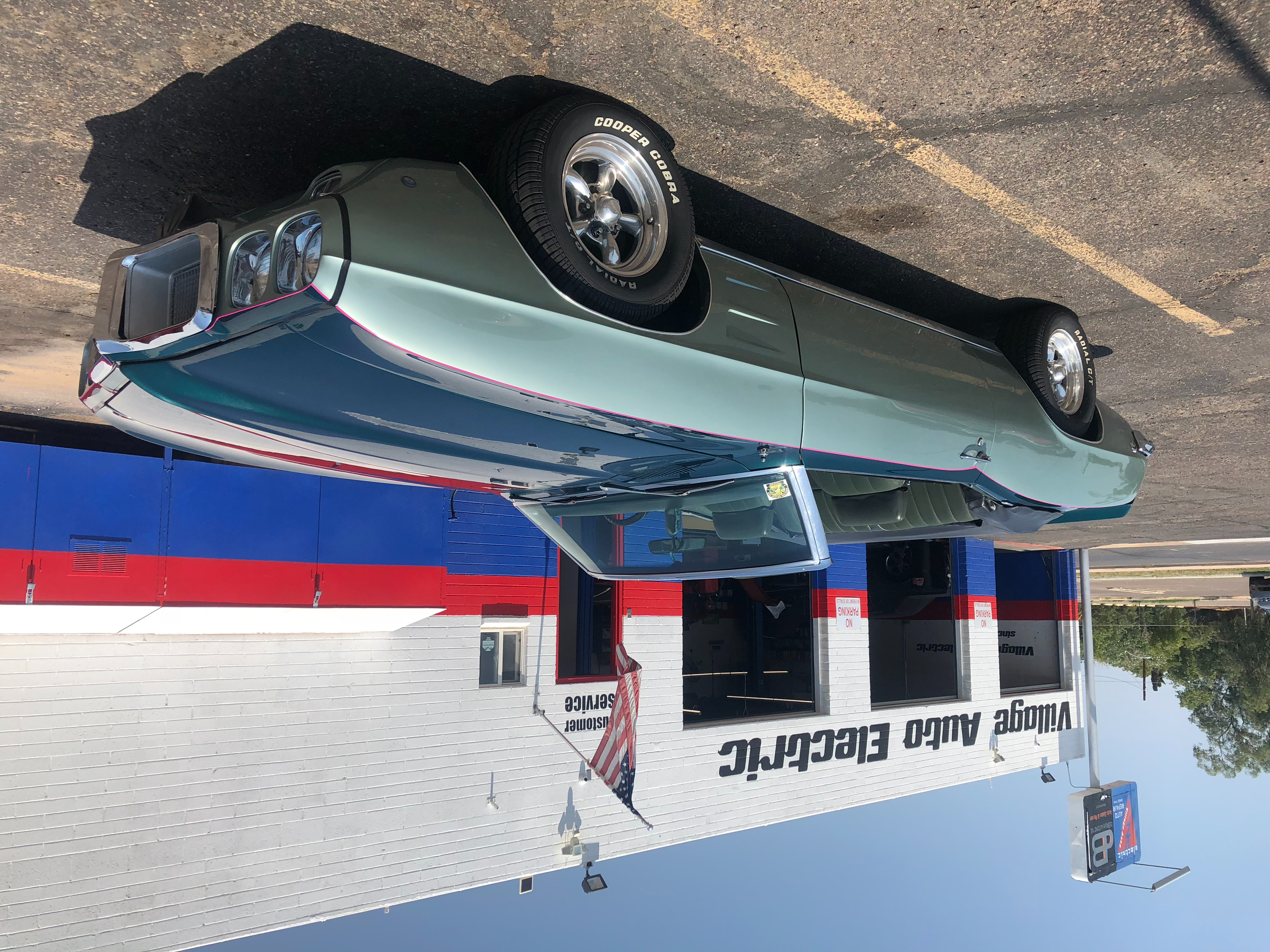
Village Auto Electric has handled difficult electrical and starting problems for Mesa drivers and referring repair shops for decades. Paid diagnostics are not parts sales in disguise. They are the process of testing power, grounds, commands, sensor data, fuel delivery, communication, and programming so the repair addresses the actual failure.
A vehicle that will not start is disruptive enough. The next step should bring you closer to a dependable repair, not a pile of replaced parts. Get clear test results, ask what failed and why, and repair the cause that the vehicle can prove.

Comments