


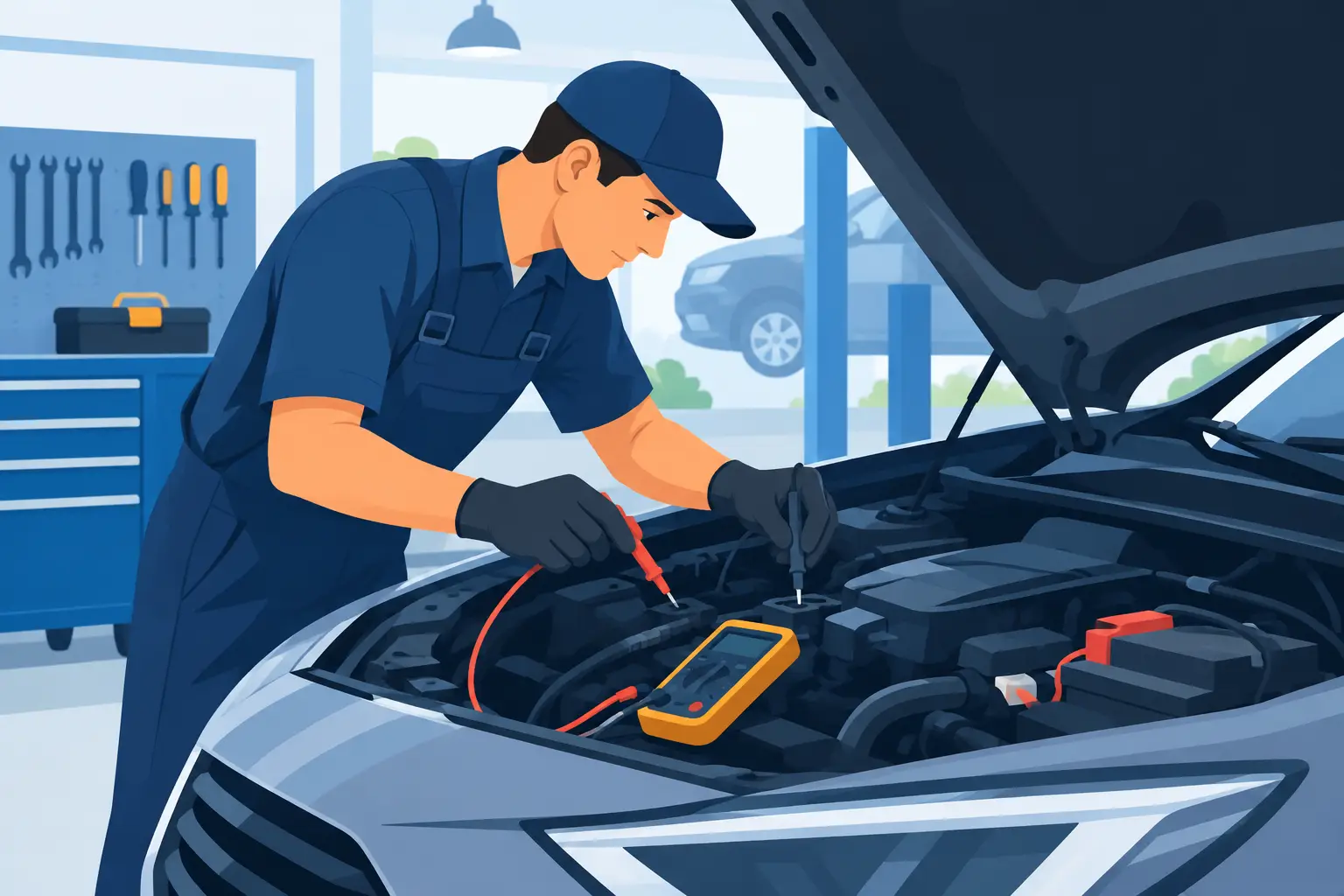
When You Need an Auto Electrician Service
A battery that goes dead overnight is not always a bad battery. A warning light is not always a failed sensor. And a vehicle that will not start may have a healthy starter, battery, and alternator. That is where an auto electrician service earns its value: finding the actual failure before replacing parts that were never the problem.
Modern vehicles rely on dozens of computers, networks, relays, modules, switches, sensors, and wiring circuits. When one part communicates incorrectly, loses power, develops resistance, or stays awake after the vehicle is shut off, the symptoms can look like several unrelated problems. Accurate electrical diagnosis is not guesswork. It is a process of testing, verifying, and following the evidence.
What an Auto Electrician Service Actually Does
An automotive electrical specialist works beyond the basic battery-and-alternator check. The job may involve charging and starting systems, parasitic battery drains, computer diagnostics, power windows and locks, warning lights, key programming, alarm systems, radios, fuel pump circuits, ABS, SRS airbags, and module programming.
The goal is not to sell the biggest repair. The goal is to identify the failed component, damaged wire, poor connection, software issue, or communication fault that caused the complaint. Sometimes the repair is a battery terminal, a relay, a broken wire inside a door harness, or corrosion hidden in a connector. Sometimes it is a module that needs programming or replacement. You do not know which until the system is tested correctly.
This matters because modern vehicles can set misleading codes. A trouble code tells a technician where the computer saw an abnormal condition. It does not automatically identify the part that caused it. Replacing the component named in a code without testing its circuit, power supply, ground, and signals can turn one problem into an expensive stack of unnecessary parts.
Signs You Need Electrical Diagnosis, Not Another Guess
Some electrical issues are obvious, such as a dead battery or a power window that will not move. Others are intermittent and frustrating. The vehicle may work perfectly for days, then fail when you are late for work, sitting in summer heat, or loading the family into the car.
Bring the vehicle in for professional diagnosis when you notice repeated no-start conditions, a battery that dies after sitting, dimming or flickering lights, recurring warning lights, erratic gauges, accessories that work only sometimes, or a key fob that no longer communicates with the vehicle. A burning electrical smell, melted connector, or repeatedly blown fuse should be addressed promptly. Continuing to install larger fuses or repeatedly resetting a circuit can cause more damage.
A few situations deserve special attention:
The battery has been replaced, but the vehicle still goes dead after a day or two.
The alternator was replaced, but a charging-system warning remains or the battery is still weak.
An ABS, airbag, check-engine, or security light returns after another shop cleared the code.
A vehicle starts intermittently, especially after rain, high heat, or a period of sitting.
Multiple accessories fail at once, such as windows, locks, radio, interior lights, or wipers.
These symptoms often have a shared power, ground, network, or module issue. Treating each symptom as an independent failure can waste time and money.
Why Battery Drains Are So Difficult to Find
A parasitic battery drain is one of the most misunderstood electrical problems. Every late-model vehicle uses a small amount of power after it is parked. Computers need memory, security systems remain active, and certain modules may stay awake for a period after the doors are locked. The question is whether the vehicle enters sleep mode and whether the remaining draw is within specification.
Finding a drain requires more than disconnecting the battery and hoping for the best. A technician must measure current correctly, allow the vehicle to power down, isolate circuits without waking modules unnecessarily, and determine what is consuming power. The source may be a glove box light, trunk lamp, aftermarket alarm, failing module, stuck relay, radio amplifier, door-latch switch, or wiring fault.
Arizona heat can make the situation feel worse because high temperatures are hard on batteries. But replacing batteries repeatedly does not repair a drain. If a new battery fails after sitting for a short time, the vehicle needs testing. WE WILL FIND THE CAUSE, not simply send you home with another battery.
The Difference Between Testing and Parts Swapping
A quality diagnostic appointment is paid professional work because the technician is buying information with time, equipment, training, and methodical testing. That information protects you from paying for parts based on a hunch.
Consider a no-start condition. The same symptom can result from a weak battery, corroded cable, failed starter, starter control issue, bad ignition switch, immobilizer fault, poor engine ground, fuel delivery problem, failed crank sensor, or computer communication failure. Each possibility requires a different repair. Installing a starter because the engine will not crank may be reasonable only after voltage drop, command signal, battery condition, and circuit operation have been verified.
The same principle applies to warning lights. An airbag warning light could involve a connector under a seat, clock spring, impact sensor, module, damaged wiring, or stored crash data. An ABS light might be caused by a wheel speed sensor, bearing-related tone ring issue, wiring damage, module fault, or voltage problem. The right repair depends on what the tests prove.
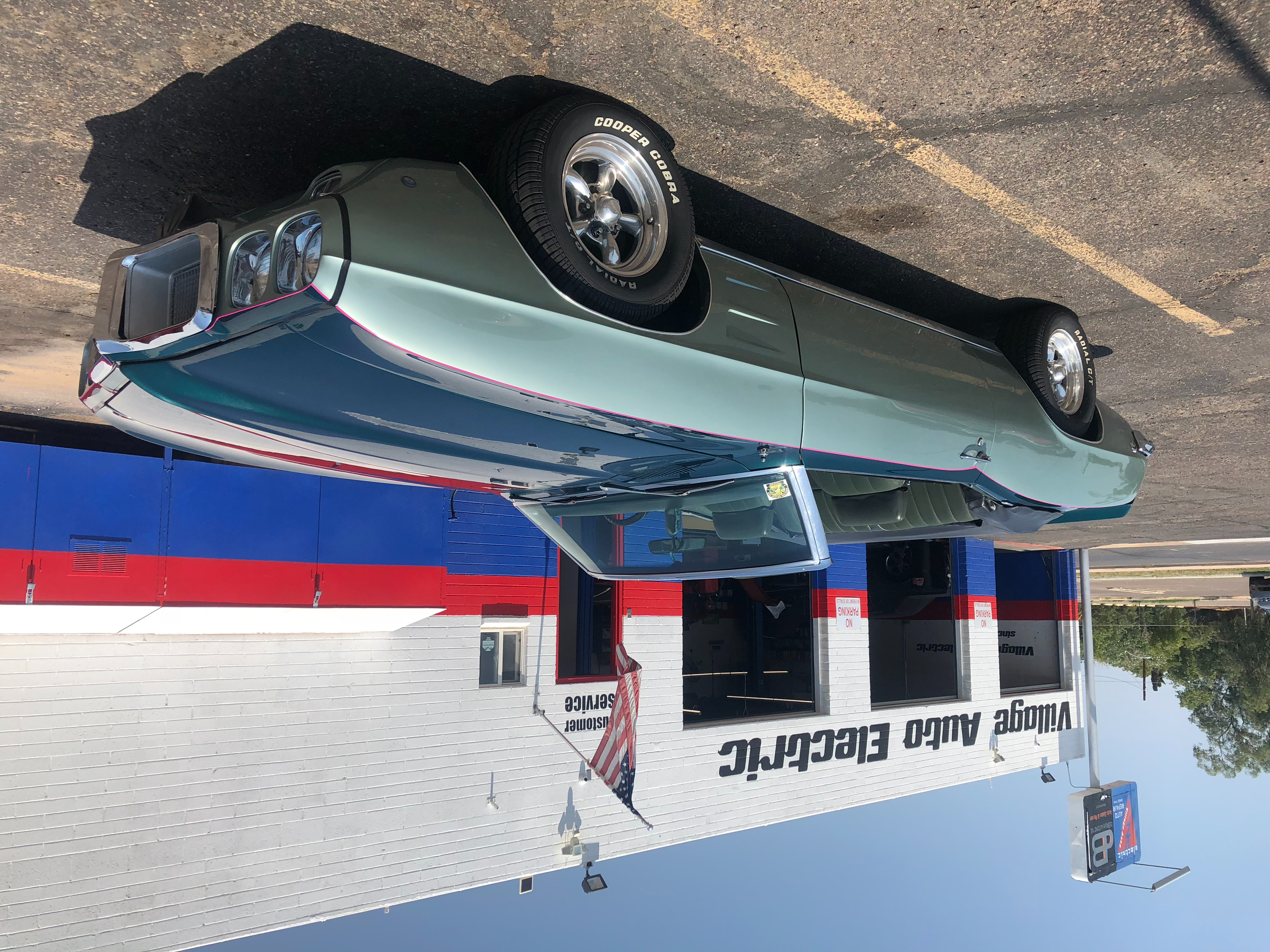
At Village Auto Electric, difficult cases are the work. Other repair shops regularly refer vehicles when routine testing did not reveal the answer. That does not mean every repair is complicated. It means the diagnosis is handled with the same discipline whether the fault is a loose terminal or a network communication failure.
What a Proper Electrical Diagnostic Process Looks Like
The process starts with the customer’s description of the problem. Details matter. Does the failure happen only when the engine is hot? After rain? Overnight? While turning? When using a particular accessory? A clear pattern can save diagnostic time.
Next, the technician confirms the concern whenever possible and checks the basics that affect every electronic system: battery condition, charging voltage, power feeds, grounds, fuse integrity, connector condition, and signs of previous repairs. A visual inspection alone is not enough, but it often reveals corrosion, rodent damage, overheated wiring, loose aftermarket connections, or poor repairs.
Computer scanning follows, but scanning is only one part of the job. A technician reviews codes, live data, module communication, and system status, then tests the relevant circuits. Depending on the fault, that may include voltage-drop testing, scope testing, continuity testing under load, current-draw measurement, network analysis, or component activation tests.
Only after the cause is supported by test results should a repair recommendation be made. Sometimes a component must be replaced. Other times it can be repaired, programmed, or restored by correcting the wiring or connection that caused the failure. WE WILL NEVER replace parts you do not need.
Electrical Problems Are Not Always Electrical Problems
This is where experience matters. A customer may describe an electrical problem because the symptom involves a light, gauge, starting issue, or computer code. Yet the root cause may be mechanical. A failing fuel pump may have proper electrical command but insufficient fuel pressure. A worn ignition component can create a misfire code that looks sensor-related. A slipping belt can reduce alternator output. A leaking A/C system can appear unrelated until a control module shuts down compressor operation to protect the system.
The reverse is also true. A mechanical repair can create an electrical issue if a connector is left loose, a harness is pinched, a ground is missed, or a module requires relearning. That is why a full-service shop with focused electrical capability is valuable. The system must be understood as a whole.
When to Stop Chasing the Problem Yourself
Checking battery terminals, replacing a key-fob battery, and looking for an obviously blown fuse are reasonable first steps. Beyond that, do-it-yourself electrical work can become costly quickly. Modern circuits may be computer-controlled, and probing the wrong wire, installing the wrong module, or bypassing a safety circuit can create new faults.
Be especially careful with airbag systems, anti-theft systems, module programming, and high-current circuits. A scan tool may display codes, but code reading is not the same as diagnosis. If the vehicle has already received a battery, alternator, starter, sensor, or module without solving the complaint, it is time to stop guessing and test the vehicle properly.
Bring notes about when the problem occurs, what repairs have already been attempted, and whether aftermarket accessories were installed. Those details can shorten the path to the answer. The best next step is simple: get the cause identified before another part is installed.

Comments